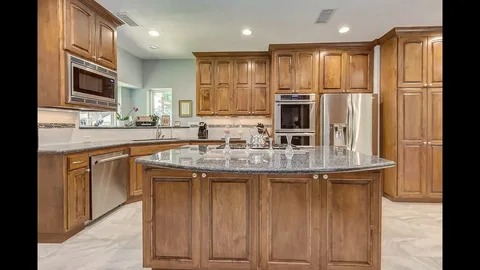
Walk into the right kitchen and something just clicks. You cannot always explain it, but the space feels warm, intentional, and alive. More often than not, the cabinets are doing most of that heavy lifting. They set the tone before anything else does.The kitchen is genuinely the heartbeat of a home. Where the coffee gets made before anyone is properly awake. It is where kids dump their backpacks and somehow that becomes the homework station.
That kind of space deserves more than whatever happens to be in stock at the nearest home improvement store. Stock cabinets are built for a generic kitchen. Yours is not generic. You live there, and that matters more than most people realize when they start planning a renovation.Custom cabinets are a completely different experience. They are designed around your actual walls, your actual habits, and your actual taste. Nothing is forced to fit. Everything just belongs. That is the kind of kitchen people walk into and immediately want to spend time in.
1. Stock vs. Semi Custom vs. Custom Cabinets What Is the Real Difference?
Most people do not realize there are actually three distinct cabinet categories, and the gap between them is bigger than you might expect. Understanding this upfront saves you from making a choice you will regret six months later.
Stock cabinets are essentially mass produced and sitting in a warehouse right now. They come in fixed sizes, a small handful of finishes, and that is pretty much it. The price is low, but so is the flexibility. If your kitchen does not match their dimensions, you are the one who has to compromise.
Semi custom cabinets sit somewhere in the middle. You get a bit more wiggle room with sizing and a wider selection of door styles. However, you are still choosing from a manufacturer’s predetermined menu. Think of it like ordering at a restaurant where you can swap two ingredients but cannot actually change the dish.
Full custom cabinets are built from scratch specifically for your kitchen.Every single measurement is taken from your space. Every finish, wood type, and feature is chosen by you. When you work with a reliable Kitchen Cabinet Supplier, the conversation shifts from “what do we have available” to “what do you actually want.” That is a meaningful difference worth paying attention to.
2. How Custom Cabinets Maximize Every Inch of Your Kitchen
Here is something that surprises a lot of homeowners. Custom cabinets do not just look better. They actually give you more usable space, even in the exact same kitchen footprint. The secret is in how they are built.
Stock cabinets come in preset widths. Nine inches, twelve, fifteen, eighteen and so on down the line. If your wall measures 91 inches, you are stuck patching the leftover space with awkward filler strips that look exactly like what they are. An afterthought.
Custom cabinets are built to match your wall exactly. All 91 inches of it, or 87, or 103. Whatever your kitchen is, the cabinets conform to it rather than the other way around.
Corners get a proper solution too. That notorious dead corner where spatulas go to retire? Gone. You can have a lazy Susan, a pull out tray system, or a diagonal cabinet designed specifically for that spot. Ceiling height storage becomes genuinely usable instead of decorative. Islands and peninsulas get wrapped in cabinetry that looks built in because it actually is.
3. Design Freedom A Kitchen That Looks Uniquely Yours
This is honestly where a lot of people start getting excited. And they should. The design possibilities with custom cabinetry are not just wider than stock options. They are practically unlimited compared to what a big box store catalog can offer you.
Do you love the crisp, uncluttered feel of a modern kitchen? Flat panel doors in a soft matte white or a moody charcoal grey will deliver exactly that. Prefer something that feels more lived in and welcoming? Shaker doors in a warm off white paired with matte black hardware will give your kitchen that cozy farmhouse quality people cannot stop pinning online.
Want to be bold? Go for it. Deep navy cabinetry with aged brass hardware looks stunning and sophisticated. Forest green with unlacquered brass is having a serious moment right now and honestly it earns every bit of the attention. These are choices you simply cannot make with stock options.
Beyond color there is the question of finish. Painted is popular but it is far from your only path. Natural wood stains show off the grain in a way that painted finishes never can. Two tone designs, where upper cabinets are lighter and lowers are darker, add visual depth and a custom feel that photographs beautifully.
Hardware seems like a small decision but treat it seriously. The right knobs and pulls are like earrings on an outfit. They complete the whole look and tie every element together in a way that feels deliberate and polished.
4. Functional Features That Change How You Actually Cook
Pretty cabinets are genuinely satisfying. But cabinets that make your daily life easier? That is where the real joy lives. Custom cabinetry is not only about aesthetics. It is about building a kitchen that actually works the way your life works.
Pull out shelves in lower cabinets are one of those features you do not know you desperately need until you have them. No more crouching on the floor and reaching blindly into a dark cabinet for that one pot you need. Everything rolls forward and meets you where you are standing.
Deep drawers for pots and pans deserve more credit than they typically get. Stacking heavy cookware inside a standard cabinet is frustrating and kind of dangerous honestly. Deep drawers keep everything visible, separated, and easy to grab without pulling out three other things first.
Built in spice storage keeps your counter from becoming a crowded mess of jars and bottles. An appliance garage tucks your toaster and coffee maker behind a roll up door so your countertops actually stay clear between uses. A pull out trash and recycling unit keeps the bin hidden but accessible without any effort.
Soft close hinges and drawer glides feel like a small upgrade until you experience a kitchen without them again. Then they feel essential. No slamming at midnight. No drawers jumping the track. Just quiet, smooth, reliable movement every single time.
Ergonomics matter more than people often plan for. If someone in your household uses a wheelchair or has limited mobility, custom cabinets can be designed to accommodate that from the very beginning rather than retrofitted awkwardly later.
5. Are Custom Cabinets Worth the Investment?
Fair question and it deserves a straight answer. Yes, custom cabinets cost more upfront than stock. Sometimes significantly more depending on the materials and complexity. But the comparison does not end at the purchase price, and that is where a lot of people get the math wrong.Quality is the first thing worth talking about. Custom cabinets are typically built with hardwoods, solid joinery, and finishes that last decades when properly cared for. Stock cabinets are often constructed with particleboard and thin veneers that start showing their age embarrassingly quickly.
Home value is the second factor. Kitchens are consistently the room that moves the needle most in real estate. A kitchen with high quality custom cabinetry is a genuine selling point, not just a cosmetic feature. Buyers notice and they are willing to pay for it.Budgeting smartly is the third piece of the puzzle. You do not have to go fully custom throughout the entire kitchen. Prioritize the high visibility areas like the main wall and island. Use semi custom in the pantry or utility zone. You still get the look and feel of a custom kitchen without treating every single cabinet as a luxury line item.
One name worth knowing in this space is Fabuwood. They produce beautifully made cabinetry that sits in that sweet spot between semi custom quality and full custom variety. Before finalizing any order, make sure to find the right Fabuwood cabinet sizes for your kitchen because getting the dimensions right at the planning stage prevents expensive corrections once installation begins.
6. How to Choose the Right Cabinetmaker or Designer
The cabinets are only as good as the person building and installing them. Choosing the right cabinetmaker is genuinely half the battle, and it is a step that deserves real time and attention rather than a quick Google search and a gut feeling.
Start with their portfolio. Look at actual completed kitchens, not just product shots or manufacturer photos. You want to see how they handle corners, how their finishing work looks up close, and whether the style of their past work aligns with what you are imagining for your space.
Ask for references and then actually call them. Online reviews matter but a real conversation with a past client tells you things a star rating never will. Ask about the timeline, the communication, and whether anything surprised them during the process.
Get everything in writing before a single cabinet is ordered. Materials, finish samples, timeline, payment milestones, installation scope. All of it. A cabinetmaker who resists putting the details in a formal contract is a cabinetmaker worth walking away from.
7. How to Plan Your Custom Cabinet Project
You have done your research. You have found someone you trust. Now the real planning begins, and having a clear roadmap makes the whole experience feel manageable rather than overwhelming.
Start by defining your vision before any measurements are taken. Collect inspiration images from wherever speaks to you. Pinterest boards, magazine clippings, screenshots from interior design accounts. The more specific your references, the more useful they are in early conversations with your designer.
Decide early whether you are working within your existing kitchen layout or doing a broader remodel. Custom cabinets work brilliantly in either scenario. A full remodel gives you more freedom to reconfigure the whole space. Working within the existing footprint is faster and more budget friendly without sacrificing the custom quality.
Get physical material samples and bring them home before committing. Finishes behave differently under your kitchen lighting than they do in a showroom under staged lighting. Look at samples in the morning, in the afternoon, and at night with your overhead lights on.
Review the design drawings carefully once they are ready. Ask every question that comes to mind even if it feels minor. Making changes on paper costs nothing. Making changes after installation costs quite a lot.
Finally, build a realistic timeline into your overall renovation plan. Custom cabinetry typically takes six to twelve weeks from order confirmation to completed installation. Knowing that upfront prevents unnecessary stress and allows you to plan around it.
Conclusion
Custom cabinets do more than organize your kitchen. They define it. They are the element that everything else in the room responds to and builds around. Get them right and the whole space clicks into place in a way that a fresh coat of paint or new appliances simply cannot replicate.
Whether you are starting completely from scratch or finally addressing a kitchen that has never quite functioned the way you needed it to, custom cabinetry is the investment that keeps giving back. Every single morning when you open a drawer and it glides smoothly. Every evening when the kitchen looks exactly the way you always hoped it would.