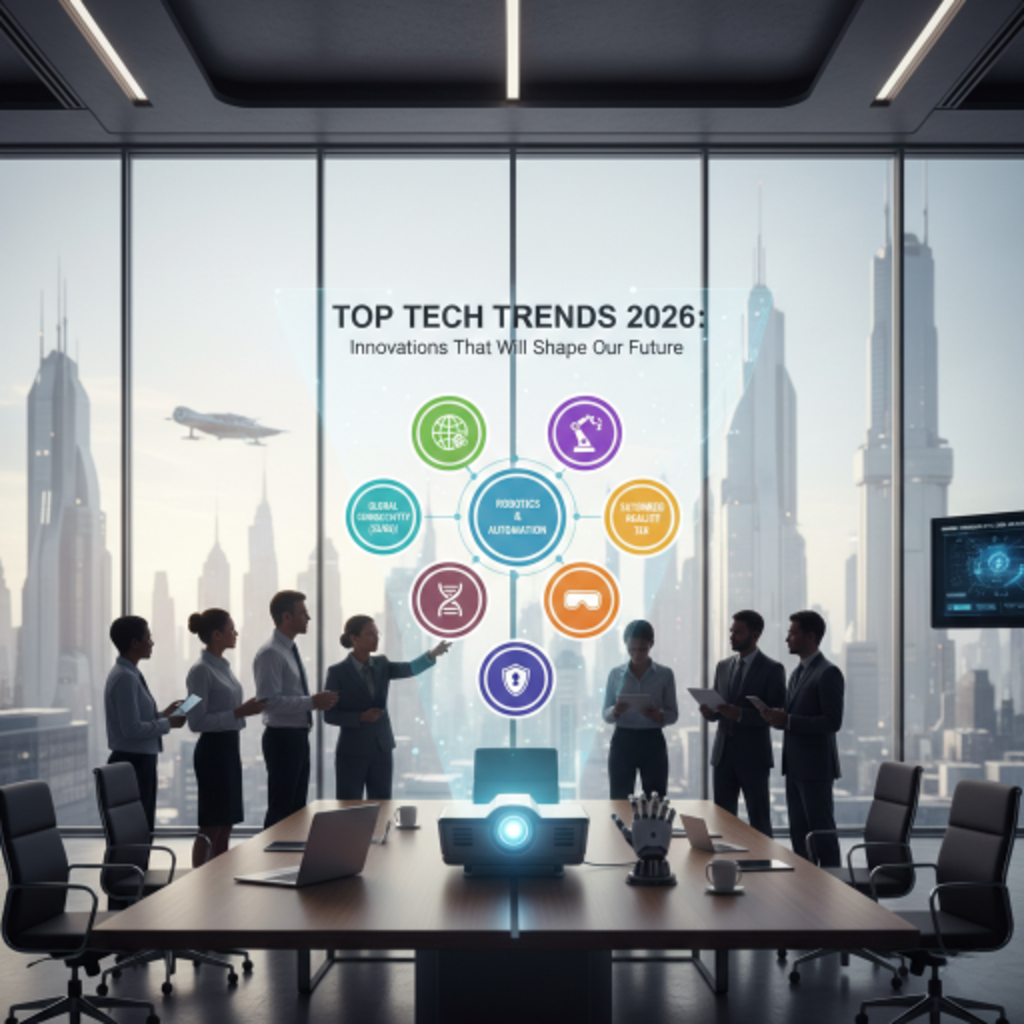
Technology continues to evolve at an unprecedented pace, transforming how we live, work, and interact. By 2026, emerging technology trends are set to redefine industries, daily routines, and global connectivity. For businesses, professionals, and tech enthusiasts, staying ahead of these trends is essential for a competitive advantage.
From artificial intelligence enhancing decision-making to sustainable solutions tackling climate change, 2026 promises transformative advancements. These technologies will not only improve efficiency but also drive economic growth, create new job opportunities, and foster a more sustainable global society.
In this guide, we explore the top technology trends in 2026, backed by research, expert insights, and real-world applications. We also explain how these trends will impact businesses, consumers, and everyday life.
1. Artificial Intelligence and Machine Learning Evolution
Artificial intelligence is no longer limited to simple automation. By 2026, context-aware AI systems will understand and anticipate human needs, reshaping business operations, healthcare, education, and personal interactions.
AI Beyond Automation: Smarter Systems
AI is advancing beyond repetitive tasks. Intelligent systems will analyze massive datasets to predict trends, optimize strategies, and improve customer engagement.
Applications in Business:
- Retail: AI predicts consumer behavior, optimizes inventory, and creates personalized marketing campaigns.
- Finance: Machine learning models assess risks, detect fraud, and recommend investment strategies.
- Logistics: AI improves supply chain efficiency by forecasting demand and reducing delays.
Key Benefits:
- Personalized recommendations for consumers
- Adaptive interfaces and real-time problem-solving
- Increased operational efficiency and customer satisfaction
AI in Healthcare: Precision Medicine and Predictive Analytics
Healthcare will be revolutionized by AI-driven diagnostics and precision medicine. Machine learning algorithms will detect patterns in patient data that humans may overlook, enabling early detection of chronic diseases such as diabetes, cardiovascular conditions, and certain cancers.
- Predictive Analytics: Identifies high-risk individuals, allowing preventive care and reducing hospitalizations.
- Genetic Profiling: AI assists doctors in tailoring treatment plans based on a patient’s DNA, improving recovery rates.
- Virtual Health Assistants: AI-powered chatbots provide real-time medical guidance and monitor patient progress.
Ethical AI and Responsible Innovation
As AI becomes more powerful, ethical considerations are critical. By 2026, organizations will adopt frameworks for responsible AI, ensuring fairness, transparency, and accountability. Ethical AI not only builds trust with users but also reduces legal risks and enhances brand credibility.
2. Quantum Computing: Next-Level Computational Power
Quantum computing promises to solve problems that classical computers cannot, unlocking unprecedented opportunities in multiple industries.
Applications Across Industries
- Healthcare: Simulates complex molecular interactions for faster drug discovery. For example, modeling protein folding could accelerate treatments for Alzheimer’s or cancer.
- Finance: Enables real-time risk analysis, investment optimization, and fraud detection using quantum algorithms.
- Cryptography: Enhances data security by challenging traditional encryption methods and developing quantum-resistant solutions.
Practical Business Implications
Early adopters of quantum computing will gain a competitive edge by accelerating research, optimizing processes, and reducing costs. Companies in logistics, pharmaceuticals, and financial services are already exploring pilot programs for quantum applications.
Challenges and Future Prospects
Despite its potential, quantum computing faces challenges: qubit stability, error correction, and high costs. By 2026, however, industry-ready solutions may emerge, particularly for high-value applications like drug discovery, climate modeling, and financial forecasting.
3. Robotics and Automation in Everyday Life
Robots are no longer confined to factories—they are increasingly collaborating with humans across industries, improving safety, productivity, and efficiency.
Smart Robotics in Manufacturing and Logistics
- Advanced sensors and AI allow robots to adapt to changing workflows.
- Quality control is automated with precision and accuracy.
- Logistics companies deploy autonomous robots and drones for inventory and last-mile delivery, reducing operational costs and delivery times.
Service Robots in Healthcare and Hospitality
- Healthcare: Robots assist in surgeries, deliver medication, and transport medical supplies.
- Hospitality: Robots handle concierge services, room delivery, and customer guidance.
- Public Services: Autonomous systems assist in cleaning, maintenance, and crowd management in public spaces.
Human-Robot Collaboration: The Future Workplace
Collaborative robots, or cobots, work alongside humans to handle repetitive or hazardous tasks. This approach increases productivity while improving workplace safety, reduces errors, and allows employees to focus on higher-value responsibilities.
4. Extended Reality (XR): AR, VR, and Mixed Reality
Extended reality (XR) technologies—augmented reality (AR), virtual reality (VR), and mixed reality—are transforming the way we interact with digital content and the physical world.
Immersive Experiences Beyond Gaming
- Education: Virtual classrooms, interactive simulations, and virtual field trips enhance learning experiences.
- Retail: AR allows customers to virtually try products, visualize furniture in homes, or customize items in real-time.
- Entertainment: Fully immersive concerts, movies, and live events attract global audiences.
Future of Social Interaction and Collaboration
XR will redefine remote collaboration through virtual workspaces, realistic meetings, and interactive training. Social XR apps enable shared experiences like virtual travel, sports, and hobbies, fostering global connectivity.
5. Green Tech and Sustainable Innovations
Sustainability is now a critical driver of technology development. 2026 will see advancements that reduce environmental impact while promoting economic growth.
Renewable Energy and Smart Grids
- AI-powered smart grids optimize energy distribution from solar, wind, and hydroelectric sources.
- Dynamic energy management reduces waste and ensures reliable supply for homes and businesses.
Sustainable Transportation
- Electric vehicles (EVs) and hydrogen-powered alternatives reduce carbon emissions.
- Improved battery technology, faster charging networks, and government incentives accelerate adoption.
Circular Economy and Eco-Friendly Innovations
- Companies adopt recycling, upcycling, and biodegradable materials.
- Sustainable manufacturing practices reduce environmental footprints.
- Eco-conscious consumers increasingly demand greener products, creating new business opportunities.
6. Connectivity: 5G, 6G, and IoT Expansion
Ultra-fast connectivity underpins many emerging technologies, enabling smart cities, connected devices, and seamless communication.
Faster Networks and Smarter Cities
- 5G and upcoming 6G networks will support autonomous vehicles, real-time data analytics, and smart infrastructure.
- Cities leverage IoT devices to monitor traffic, energy usage, and public safety, improving urban efficiency.
IoT in Daily Life
- Smart homes monitor energy consumption, security, and health metrics.
- Industrial IoT optimizes manufacturing and logistics processes.
- Wearables track health and lifestyle data, empowering individuals and healthcare providers alike.
7. Biotechnology and Health Tech Breakthroughs
Healthcare innovation will accelerate, improving outcomes, accessibility, and patient longevity.
Gene Editing and Personalized Medicine
- CRISPR and advanced gene-editing tools allow targeted treatments at the genetic level.
- Personalized medicine tailors interventions to individual DNA, lifestyles, and medical histories.
Wearable Tech and Continuous Monitoring
- Smartwatches, fitness trackers, and medical wearables monitor vital signs and provide actionable insights.
- AI-driven health monitoring predicts risks and guides preventive care strategies.
AI-Powered Diagnostics and Treatment
- AI assists doctors in accurate diagnosis and effective treatment planning.
- Predictive analytics optimize resource allocation and preventive healthcare measures.
8. Cybersecurity and Data Privacy in 2026
As technology integrates into everyday life, cybersecurity becomes paramount.
Emerging Threat
- AI, IoT, and connected devices introduce new vulnerabilities.
- Cybercriminals use advanced tools for sophisticated attacks.
AI-Driven Security Solutions
- Real-time monitoring of networks
- Predictive threat detection and automated response
- Adaptive security protocols to counter evolving threats
Best Practices for Individuals and Businesses
- Regular software updates and multi-factor authentication
- Employee cybersecurity training
- Ethical handling of user data to ensure trust and compliance
9. Additional Emerging Tech Trends in 2026
- Edge Computing: Processing data closer to devices for faster decision-making.
- Brain-Computer Interfaces (BCI): Direct communication between brains and devices, improving accessibility and productivity.
- Autonomous Drones: Expanding in delivery, agriculture, and environmental monitoring.
- Digital Twins: Virtual replicas of physical assets for predictive maintenance and simulation in industries.
Conclusion
The technology trends of 2026—from AI, quantum computing, XR, and green tech to biotechnology and cybersecurity—will transform industries, lifestyles, and global connectivity. Staying informed and adopting these innovations responsibly will be essential for success.
Businesses that embrace these technologies strategically can gain competitive advantages, improve efficiency, and foster sustainable growth. Individuals and organizations that leverage emerging innovations ethically and intelligently will shape a better, more connected future.
FAQs
Q1: What are the top tech trends to watch in 2026?
AI, quantum computing, robotics, XR, green tech, connectivity, biotechnology, cybersecurity, edge computing, and digital twins.
Q2: How will AI impact jobs?
AI will automate repetitive tasks, enhance decision-making, and create new roles in AI management, ethics, and data science.
Q3: Which industries benefit most from XR and robotics?
Healthcare, manufacturing, education, retail, entertainment, logistics, and hospitality.
Q4: How will sustainable tech affect daily life?
Green tech will optimize energy usage, reduce emissions, and make products more eco-friendly, benefiting both individuals and communities.
Q5: What is the role of quantum computing in business?
Quantum computing will accelerate research, improve risk assessment, optimize logistics, and enable breakthroughs in healthcare, finance, and cybersecurity.
Q6: How will 5G and 6G connectivity transform society?
They will enable smart cities, autonomous vehicles, IoT expansion, virtual collaboration, and seamless digital experiences.