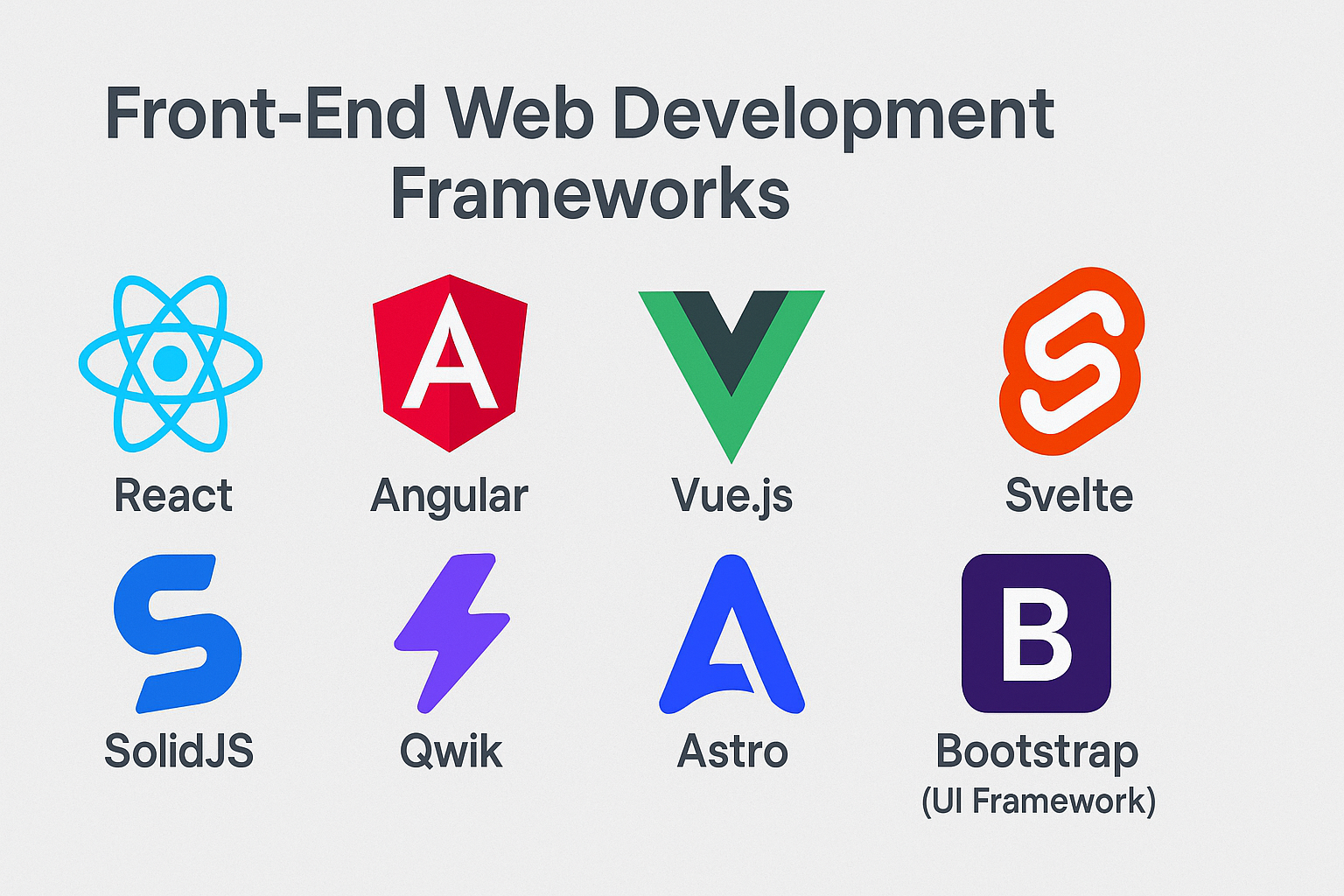
In the ever-evolving digital landscape, the tools and technologies used by a Website Developer are constantly changing. As we step into 2025, web development is becoming faster, more efficient, and more user-focused than ever before. Businesses today demand seamless, scalable, and secure websites—and to meet these expectations, developers rely on powerful frameworks. Whether you are an aspiring Website Developer or part of a Website Development Company in india, staying up-to-date with the latest frameworks is essential to remain competitive.
This article explores the top web development frameworks to learn in 2025, highlighting their unique features, advantages, and why they are the backbone of modern web development.
1. React.js – Still the King of Front-End Frameworks
React.js, developed by Facebook (now Meta), continues to dominate front-end development in 2025. It’s not just a library—it’s a massive ecosystem that powers some of the world’s most popular websites, including Instagram, Airbnb, and Netflix.
Why Learn React.js:
- Component-Based Architecture: Enables code reusability, making development faster and more efficient.
- Virtual DOM: Improves performance by updating only the changed parts of the user interface.
- Strong Community Support: With thousands of developers contributing to the ecosystem, solutions are easily available.
- SEO-Friendly Rendering: When paired with frameworks like Next.js, React ensures faster load times and better SEO.
For any Website Development Company, React is a must-have skill to build dynamic and interactive web applications that deliver an exceptional user experience.
2. Next.js – The Future of Server-Side Rendering
Next.js, built on top of React, is revolutionizing how websites are rendered. It combines the best of client-side and server-side rendering, making it ideal for high-performance and SEO-optimized websites.
Why Next.js is Trending in 2025:
- Hybrid Rendering: Combines static generation and server-side rendering for better performance.
- API Routes: Simplifies back-end logic within the same project structure.
- Built-in Image Optimization: Enhances website speed and performance automatically.
- Seamless Integration with Headless CMS: Ideal for content-driven websites and eCommerce platforms.
Many top Website Design Companies prefer Next.js because it streamlines workflows and supports scalability for enterprise-grade applications.
3. Vue.js – The Progressive Front-End Framework
Vue.js continues to attract developers in 2025 due to its simplicity and flexibility. Designed to be progressive, Vue can be adopted incrementally based on project needs.
Why Developers Love Vue.js:
- Lightweight and Fast: Perfect for performance-sensitive projects.
- Easy Learning Curve: Ideal for beginners transitioning into modern JavaScript frameworks.
- Reactive Two-Way Data Binding: Keeps data and user interface in sync effortlessly.
- Rich Ecosystem: Vue Router and Vuex provide advanced routing and state management features.
For a Website Developer looking for versatility, Vue.js remains a go-to framework for building responsive and user-friendly interfaces.
4. Angular – Enterprise-Grade Powerhouse
Developed and maintained by Google, Angular is one of the most robust and structured frameworks available today. It’s favored by large enterprises and organizations for building scalable applications.
Key Features of Angular:
- TypeScript-Based Development: Offers strong typing, error reduction, and maintainability.
- Modular Architecture: Enhances code organization and reusability.
- Dependency Injection: Simplifies testing and improves flexibility.
- Comprehensive Tooling: Built-in tools for routing, forms, HTTP requests, and more.
A Website Development Company that serves enterprise clients can greatly benefit from Angular’s strong architecture and powerful capabilities.
5. Svelte – The New Age Lightweight Framework
If React and Vue made front-end development efficient, Svelte is taking it one step further. Instead of running the framework in the browser, Svelte compiles the code at build time, resulting in extremely fast and lean applications.
Why Svelte is Growing Rapidly:
- No Virtual DOM: Directly updates the DOM, making it faster than most frameworks.
- Smaller Bundle Sizes: Improves page load times significantly.
- Less Boilerplate Code: Simplifies coding for developers.
- Excellent Performance: Ideal for mobile-first web apps.
Svelte’s unique approach makes it an exciting choice for a Website Design Company that values speed, simplicity, and innovation.
6. Node.js – Powering the Modern Back-End
When it comes to back-end development, Node.js remains the top choice for developers in 2025. It enables JavaScript to be used on the server side, allowing developers to create full-stack solutions with one language.
Benefits of Using Node.js:
- Asynchronous and Event-Driven: Handles multiple requests simultaneously.
- Vast NPM Ecosystem: Offers thousands of ready-to-use packages.
- Cross-Platform Development: Ideal for building APIs and real-time applications.
- Perfect for Microservices: Enhances scalability for large projects.
For a Website Development Company, Node.js is indispensable for building fast, scalable, and secure server-side applications.
7. Express.js – The Minimalist Back-End Framework
Express.js, built on top of Node.js, is one of the simplest and most flexible back-end frameworks available. It is often used to build APIs and web applications quickly.
Why Developers Choose Express.js:
- Minimal Setup: Perfect for rapid application development.
- Custom Middleware: Allows advanced control over request handling.
- Full Stack Compatibility: Pairs seamlessly with React, Angular, or Vue.
- REST API Support: Ideal for modern, data-driven applications.
Any Website Developer familiar with JavaScript can easily pick up Express.js and start building efficient back-end systems.
8. Django – The Python Powerhouse
For developers who prefer Python, Django continues to be a leading back-end framework in 2025. Known for its security, scalability, and rapid development capabilities, Django is widely used in enterprise and data-driven web applications.
Top Advantages of Django:
- “Batteries Included” Approach: Comes with built-in features like authentication, ORM, and admin panels.
- Excellent Security: Prevents common vulnerabilities like SQL injection and cross-site scripting.
- Scalable and Reliable: Used by companies like Instagram and Pinterest.
- Python Integration: Works seamlessly with AI, ML, and data analytics tools.
A Website Design Company that works on advanced business applications or AI-integrated solutions can leverage Django for speed and reliability.
9. Laravel – The PHP Framework for Modern Developers
Laravel remains the go-to framework for PHP developers in 2025. It simplifies complex coding tasks and helps developers build elegant, functional web applications faster.
Key Benefits of Laravel:
- MVC Architecture: Keeps logic and presentation separate.
- Eloquent ORM: Simplifies database operations.
- Blade Templating Engine: Makes front-end integration easier.
- Powerful Security Features: Offers built-in protection against threats.
Many Website Development Companies still rely on Laravel for building CMS systems, business portals, and custom applications due to its versatility and large community support.
10. Ruby on Rails – The Veteran Framework That Still Shines
Though not as dominant as it once was, Ruby on Rails continues to be a reliable and developer-friendly framework in 2025. Its “convention over configuration” philosophy makes development quick and efficient.
Why Ruby on Rails Still Matters:
- Rapid Prototyping: Perfect for startups and MVPs.
- Built-in Testing Framework: Ensures better code quality.
- Active Community: Constantly updated with modern libraries.
- Full-Stack Capabilities: Handles both front-end and back-end requirements.
For a Website Developer focused on quick deployment and simplicity, Rails remains a valuable addition to their toolkit.
Conclusion: Choosing the Right Framework for 2025
The choice of framework depends on your project requirements, goals, and team expertise.
- If you want fast, interactive front-end applications, go with React.js, Vue.js, or Svelte.
- For robust back-end systems, Node.js, Express, or Django are perfect.
- For enterprise solutions, Angular and Laravel provide structure and scalability.
- For SEO-driven, performance-focused sites, Next.js leads the pack.
As the digital world advances, the demand for skilled Website Developers and innovative Website Design Companies will only grow. Learning these frameworks in 2025 will not only boost your technical expertise but also position you for long-term success in the evolving world of Website Development.